The Reset Trip

The Reset Trip: Why Taking Time Away Can Bring You Back to Yourself

There’s a quiet kind of magic in getting away — not just from work or routine, but from the noise that blurs your sense of self. A self-care “reset” trip isn’t about escape. It’s about realignment — returning to your life with a steadier mind, clearer energy, and a kinder relationship with your body and goals.

The Short Take: Why You Need It

Sometimes the best progress comes from pause. Reset trips — whether a weekend by the coast or a week in the mountains — create deliberate distance from the autopilot of daily life.
They help you:

  • Interrupt stress cycles before burnout sets in

  • Reconnect with intrinsic motivation instead of constant output

  • Restore focus and emotional bandwidth

  • Strengthen resilience and decision clarity

Think of it not as indulgence, but as maintenance for the human operating system.

The Science of Stepping Away

Research in cognitive restoration theory shows that environments offering “soft fascination” — nature, art, quiet streets — allow the prefrontal cortex to rest. That’s the region responsible for planning, decision-making, and self-control. A reset trip, even short, reboots that part of the brain that gets overused by constant attention-switching and digital overload. Result: sharper focus, better mood regulation, and higher creativity on return.

BenefitWhat Happens During a Reset TripLasting Impact
Cognitive RecoveryMental load decreases as environment changesImproved clarity and focus
Emotional RegulationNervous system exits “fight-or-flight” loopLower anxiety and irritability
Physical RenewalSleep and circadian rhythm recalibrateIncreased energy and immunity
Perspective ExpansionDistance reframes daily problemsRenewed motivation and gratitude

How to Plan a Reset Trip (Checklist)

You don’t need luxury. You need intention. Here’s a framework for designing your own reset experience:

1. Choose a place that changes your rhythm.
Think: somewhere slower than your current environment.

2. Leave space in your schedule.
If every hour is booked, you’re not resting — you’re just relocating stress.

3. Prioritize silence and sunlight.
Morning light anchors your mood and resets sleep hormones.

4. Limit digital connection.
Delete work apps or use phone-free blocks.

5. Bring something analog.
A journal, a paper book, a sketchpad — tools that slow you down.

6. End with a ritual of return.
Before coming home, write one sentence that summarizes what you want to remember.

What to Expect Emotionally

At first, you might feel restless. Your mind will keep reaching for tasks or timelines. This is withdrawal — the body adjusting to the absence of constant stimulus. Within 24–48 hours, however, the nervous system begins to settle. The result is a mix of lightness and clarity. You notice things — meals, sounds, your own breathing — that have faded into background noise. That awareness is the point.

Preparing to Step Away from Work (Without Chaos)

Many people skip breaks because they fear what will happen when they’re gone. With a few smart moves, your time away can be smooth and stress-free:

1. Communicate early.
Tell clients and teammates about your dates well in advance. Set an out-of-office message that directs urgent matters elsewhere.

2. Delegate or automate.
If you’re self-employed, consider hiring a virtual assistant to manage email or handle routine tasks.

3. Pre-clear your workload.
Tackle high-priority projects ahead of time so you don’t leave with loose ends.

4. Share clear handover notes.
Whether you’re part of a team or solo, create a document summarizing current status and next steps.

When a Reset Isn’t a Luxury — It’s Prevention

People often wait until exhaustion forces a break. But self-care, practiced early, prevents collapse later. Reset trips function like recalibrating an instrument — keeping you in tune rather than repairing damage. The paradox is that when you rest before you “need” to, you rarely hit full burnout.

FAQ

Q: How long does a reset trip need to be?
A: Even 48 hours away from your usual environment can reset your nervous system. Consistency matters more than duration.

Q: What if I can’t travel far?
A: Proximity isn’t the metric — novelty is. A nearby cabin, coastal town, or even a friend’s guest room can offer enough environmental contrast.

Q: How often should I do this?
A: Aim for one mini-reset each quarter. Frequency helps maintain balance instead of waiting for exhaustion.

Q: How do I know it’s “working”?
A: You’ll notice it in your reactions — less reactivity, more perspective, and a quiet sense of readiness to re-engage.

A Useful Resource for Planning Mindful Time Away

If you want a structured approach to planning retreats that combine rest and renewal, the Center for Mindful Self-Compassion offers excellent online and in-person programs designed to deepen awareness and reduce stress. They’re secular, evidence-based, and accessible globally.

Final Reflection

The world rewards momentum, but it’s awareness that sustains it. A reset trip reminds you that presence is not passive — it’s maintenance for your mental and emotional engine. With the right preparations at home and work, you’ll feel a lightness during the trip that stays with you.

The Freedom Blueprint: How to Become a Digital Nomad in 2025

Digital Nomad

You’ve seen it — that photo of someone working from a hammock or a café overlooking turquoise water. It’s not fantasy anymore. The digital nomad lifestyle lets you blend meaningful work with freedom, as long as you’re intentional about your setup. Here’s how to turn the dream into a durable, balanced way of life.

TL;DR

To live and work remotely from anywhere, you’ll need:

  • A stable income stream

  • Portable tools and reliable internet

  • A plan for visas, money, and insurance

  • A discipline-first mindset — freedom follows structure


The 5-Step Roadmap to Going Nomad

StepFocusHelpful Resource
1. Define Your “Why”Identify your motivation: freedom, growth, or escape from burnout.Mindvalley Vision Board Tips
2. Pick a Remote-Friendly CareerOptions include writing, design, teaching, and customer support.We Work Remotely
3. Build an Online Income StreamFreelance, consult, or launch a service-based side business.Upwork
4. Test Your SetupTry a short remote stint locally before going international.Nomad List
5. Sort Out FinancesManage global payments with digital banking tools.Revolut

How to Build Your Nomad Workflow

  1. Set up your workspace. Choose a calm spot with good Wi-Fi — coworking spaces are ideal for focus and community.

  2. Stay organized solo. Use an individual-friendly app like Todoist to track projects, clients, and time zones.

  3. Protect your connection. A VPN like ProtonVPN keeps your data safe when using public Wi-Fi.

  4. Keep a rhythm. Block work hours, rest days, and local adventures — balance is the secret weapon of long-term nomads.

  5. Back everything up. Cloud storage saves you from tech disasters while abroad.


Nomad Travel Packing List

  • Passport + digital copies in cloud storage

  • Global health insurance

  • VPN for secure connections

  • Backup SIM or portable Wi-Fi hotspot

  • Noise-canceling headphones

  • 3–6 months of savings buffer

  • International debit or credit card


Quick FAQ

Q1: How much should I save before leaving?
Aim for at least $5,000–$8,000 — it gives you breathing room while adjusting to travel life.

Q2: Do I need to be self-employed?
No. Many full-time employees negotiate remote flexibility.

Q3: How do I meet other nomads?
Try coliving communities or networks like Outsite to connect with like-minded travelers.

Upskill While You Explore

If you want to stay competitive, keep learning as you move. Online education makes it easy to grow your skills between flights and client calls. Consider this: You can enroll in flexible programs that fit around travel schedules — from technology degrees to marketing certificates.

Explore options from institutions that offer self-paced, accredited online programs designed for working professionals.

Why it matters: Continuous learning gives you leverage — the freedom to choose clients and projects on your terms.

Featured Resource: Smarter Travel Planning

Before booking your next trip, use Skyscanner to find flexible, multi-city flights. You can track prices and explore destinations “everywhere” for spontaneous yet budget-friendly routes.

Mini Self-Audit Checklist: Are You Nomad-Ready?

  • I can earn income remotely

  • I have savings for at least 3 months

  • My work doesn’t rely on a fixed location

  • I’m disciplined about time and goals

  • I’ve researched visa and tax rules

  • I have backup internet and cloud storage

  • I’m ready to live light and move often


In Closing

Becoming a digital nomad isn’t just a lifestyle shift, it’s a mindset change. You’re not escaping the 9-to-5; you’re designing your own rhythm. With preparation, adaptability, and curiosity, you can make the world your workspace — one Wi-Fi connection at a time.

Algarve West Coast Road Trip.

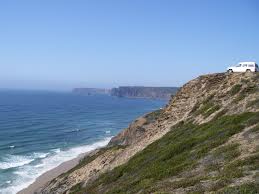
The Algarve West Coast. Some of the best coastal scenery in Europe awaits you here, pristine, deserted beaches and rugged cliffs will captivate you.

Fishing villages, deserted beaches, rugged cliffs and views, views and more views!

Some of the best coastal scenery in Europe awaits you here, pristine, deserted beaches and rugged cliffs will captivate you. Take the A22 or EN125 to Lagos, Lagos is a day trip all on its own so don’t include it on this itinerary there is simply not the time. Continue west along the EN125. At Vale Verde turn left on the EN537 to visit Praia da Luz and Burgau. Don’t turn north at Burgau keep going west along a much smaller coast road to Salema. These are all small fishing villages that are popular but not swamped with tourism. Great fish restaurants in all of them.2004 hols nigels camera 008

Changes in Scenery and landscape

Head north again until you hit the EN125 again and head west in the direction of Villa do Bispo and Sagres. You will notice that the landscape has changed drastically, very few trees and quite windswept, not unlike Cornwall in the UK, for much the same reason. At Sagres visit the Fortaleza de Sagres and the Cabo de Sao Vicente light house. The cliffs here are spectacular albeit dangerous, don’t go too close to the edge! You are also at the most South Western corner of Europe.West coast 1

Retrace your steps to Vila do Bispo and find the north west corner of the village near the market, head out on the M1265 to Praia do Castelejo, this is one of the best unspoiled beaches in the Algarve, if not Portugal. Back to Vila do Bispo and then head north on the EN268. There are about a dozen small tracks that head west off this road to some spectacular and remote beaches, each about 4kms long, you may need a 2nd day to try some of these. Head north and (don’t miss this section), just 2-30 meters before the quaint village of Carrapateira there is a turn to the left that goes south west to Praia do Amado and from here a wonderful cliff top road that runs north, don’t take a right turn to Carrapateira but continue along the cliff road. There are some great cliff top board walks you can go on. Eventually this road will look down on Praia do Bordeira which is a kite surfers paradise and end up back on the EN268.

Historic Aljezur

Head north again. The EN268 will join the EN120 continue north in the direction of Aljezur which is an old village to explore with a castle and some excellent traditional restaurants. Drive through the narrow streets and keep going uphill to the castle (to save your legs). A few kms before Aljezur you will have passed a turning to the coast, if you have time, track-back and take the M1003-1 to Praia da Arrifana, a surfers haven with stunning scenery, fishing harbour and a small fort that was badly damaged by a tsunami in 1755 which stands atop a 200 foot cliff, yes a tsunami, seriously.

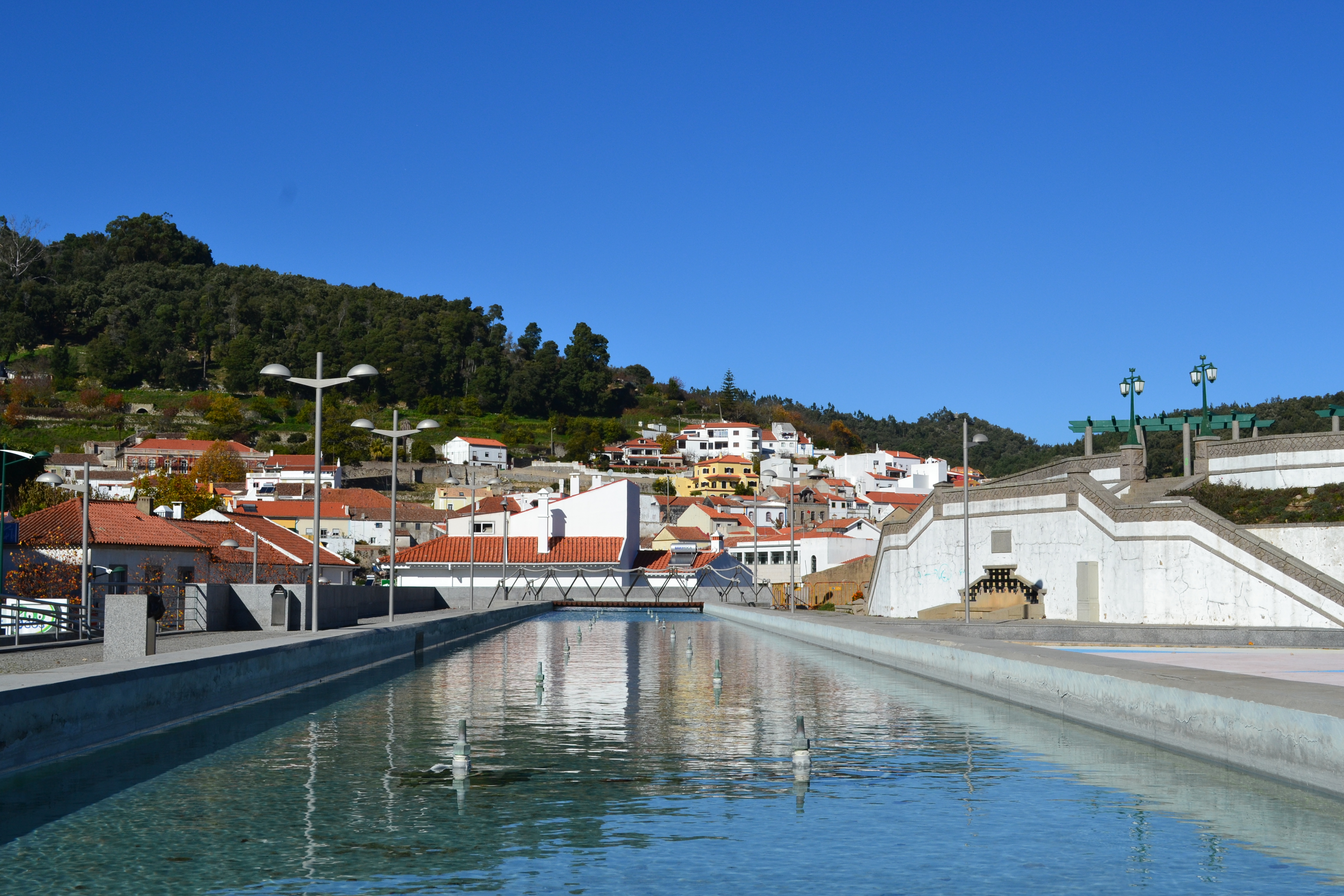
DSC_0251At this point you can turn back on the EN120 to Lagos about an hours drive. Or from Aljezur take the EN267 in an easterly direction towards Monchique. This is a delightful route via the village of Marmelete and then along a contour road to the EN266 just south of Monchique, turn right in the direction of Portimao, this route will take about one hour 15 minutes.

Spicy Seafood Rice

Spain has Paella, Portugal has Arroz Marisco and Canada has Spicy Seafood Rice….well it does now! We love Seafood of all types and in the winter when in Monchique Portugal at our villa we enjoy eating out and often at seafood restaurants, but also cook at home and I make my own versions of Arroz Marisco and even Paella sometimes but in Canada I resort to this dish and I think it’s my favourite.
Visit blogadda.com to discover Indian blogs

IMG-20171102-WA0001

The photo is the same dish but this one has more Salmon and less shellfish, this is just before the rice is added.

Ingredients for two people:

  • 1 Cup of Basmati Rice
  • 2 Medium white onions finely chopped
  • Half a dozen cloves of garlic finely chopped
  • 1 cup of finely chopped green pepper
  • 1 cup of finely chopped red pepper
  • Half cup of frozen garden peas
  • Cup of finely chopped mushrooms
  • 750 grams of Seafood
  • Half cup of olive oil
  • 4 teaspoons of Sambal Oelek
  • Sea salt

I have tried several types of chilli paste, Sambal Oelek has a distinct flavour that goes extremely well with Seafood.

The 750 Grams of seafood can be a mixture of any or all of the following, Salmon cut into 1″ cubes, frozen shelled prawns, squid, calamari, octopus, crab meat, clams, mussels, I usually buy a 3-400 gram frozen packet of mixed seafood and add our own prawns and salmon to make it up to 750gm. We use fresh caught wild salmon, we catch loads of the stuff in Canada and this is one way of using it up.

Let the frozen items defrost a couple of hours.

Start to cook the basmati rice in salted water until el dente

At the same time heat the olive oil in a large non stick wok or large frying pan, and fry off the, onion, garlic, peppers, peas and mushrooms for about 5-10 minutes turning constantly. Add more olive oil if it looks a bit dry and is not actually frying. Add the seafood and continue to cook for about 5 minutes, add the Sambal Oelek and cook five more minute continually turning the food. Again if it looks dry splash a bit more olive oil in. When the rice is done, strain and rinse with boiling water, drain very well and add it to the wok, turn the rice into the seafood mixture until all the white rice has been coated with the sauce. Season to taste if you like hot add more Sambal Oelek, or add more to taste when served.

Serve and enjoy. Goes well with dry or medium dry white wines and light beers.

The reason why we use so much salmon.

Perfect BBQ Chicken Piri Piri

Whether you are at home or staying at our villa rental in Algarve you might want to try your hand at authentic Portuguese chicken Piri Piri.

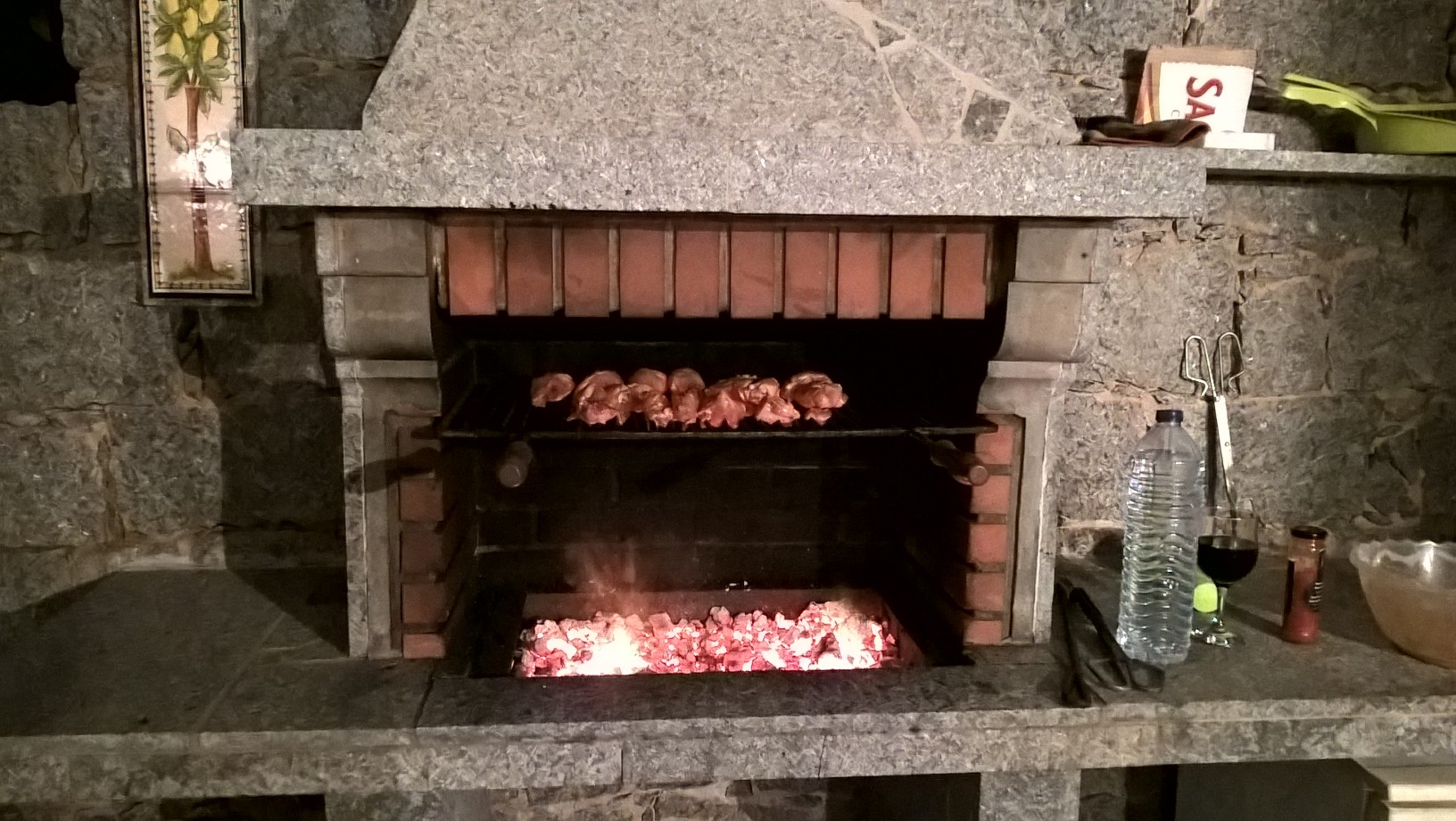
First of all, if you don’t have a charcoal BBQ and charcoal then it simply will not turn out right nor taste the same.BBQ Chicken Piri Piri

Here is how we do it at Villa Vida Nova!

Buy the smallest and most tender chickens you can find and the more yellow the skin is the better. Dissect the chicken through the joints and cut the breast into manageable pieces, keep the skin and bone on but cut off any excess fat and discard. You can just buy drums and thighs if you like the dark meat, IMO they taste better than breast anyway.

There are many Piri Piri sauces in the local supermarket in Monchique, buy one and pour it over the chicken. You can add some fresh Piri Piri seeds from the garden if they are ready, be careful, don’t touch your eyes or anything sensitive after handling them! Add a handful of coarse salt, a shot or two of whiskey, half the juice of a lemon from the garden and leave for 24 hours in the fridge, turning the pieces over several times so that they get a good coating all over.

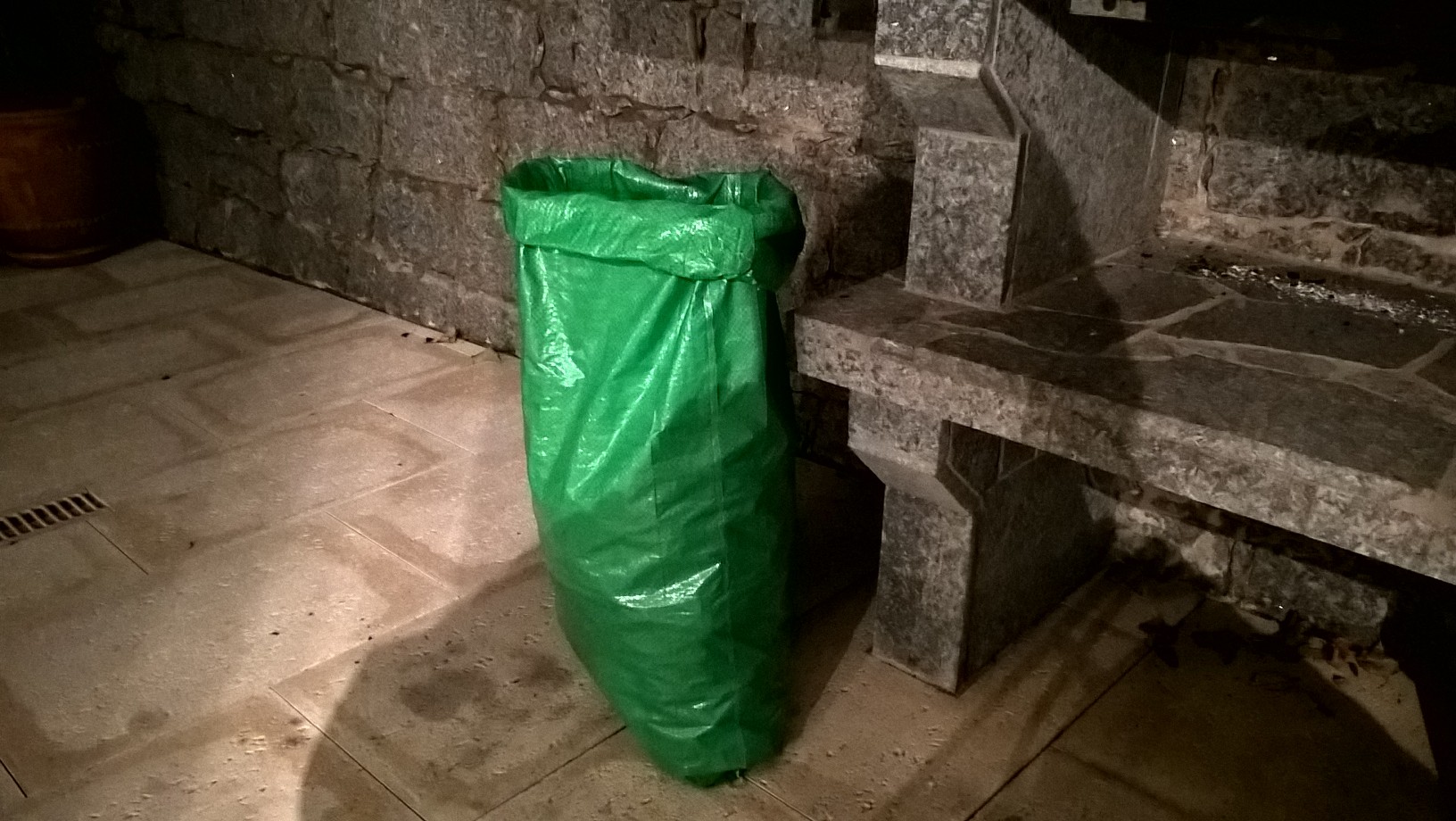
Chicken needs 40-45 minutes on the BBQ to make sure it is cooked through and not pink on the bone. So for this a supermarket bag of charcoal is not going to do it, 2 maybe but you don’t want to run out, so buy a big sackful from the vegetable shop with the plastic donkey on the Alferce road about 1/3 of a mile from the Intermarche on the left. A big sack is about 10-12 Euros whereas the Intermarche bags are about 5 Euros for about 1/6th of the quantity. You will then have plenty for several BBQs and what is left over the next guests will appreciate. Don’t skimp on the charcoal.

Use plenty of charcoal in the BBQ with a couple of fire lighters get it going and put the griddle in as low as possible so any fat on it burns off. Use the wire brush to give it a good clean, turn it over and do the other side. After about 20 minutes it should be ready but still too hot, level out the hot coals and damp it down by splashing cold water from a plastic drinking bottle. Keep that full and handy.Chicken Piri Piri at Villa Vida Nova

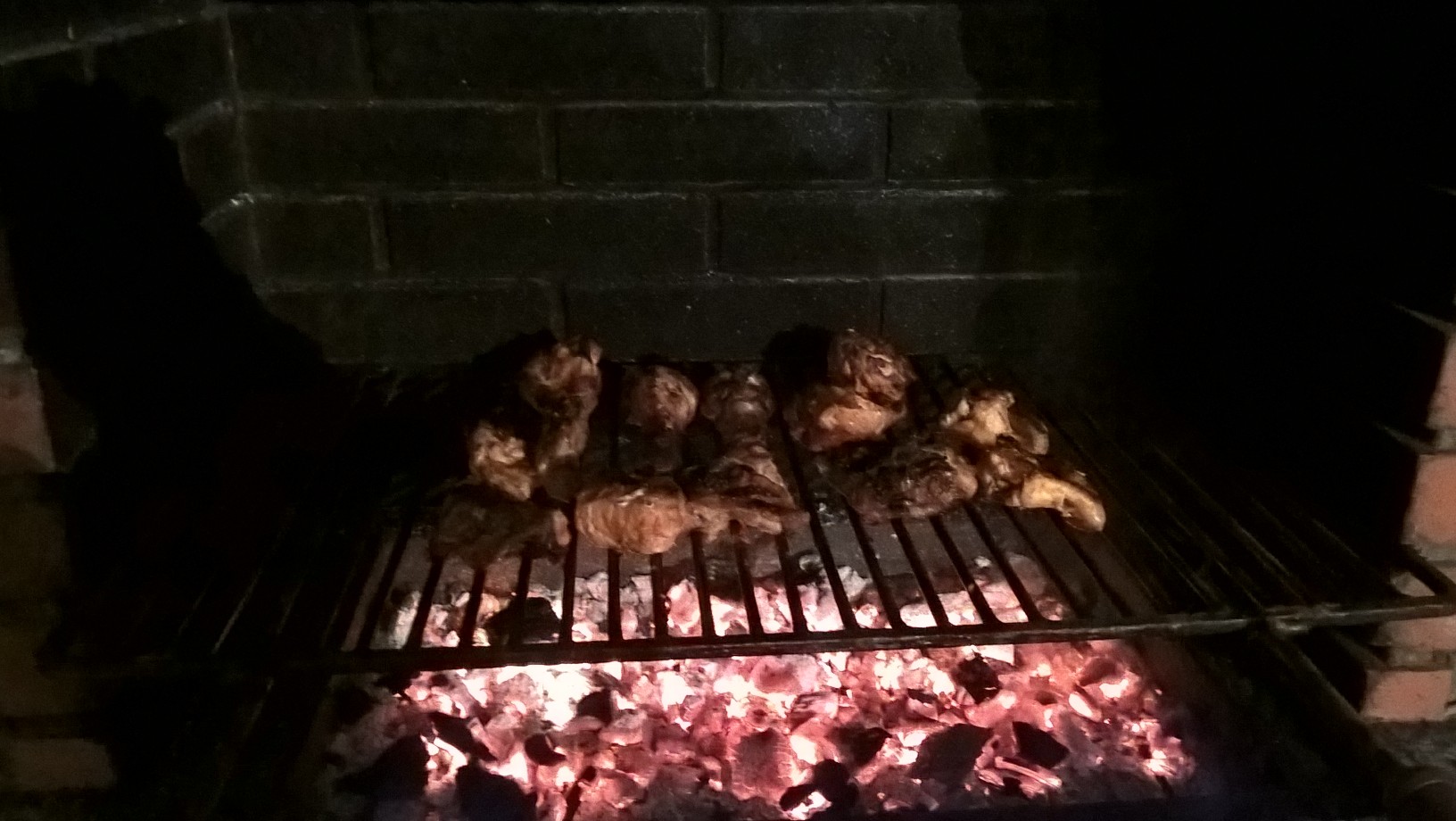
Put the chicken on the griddle the thickest pieces in the middle at the back and the thinnest and smallest pieces at the front and place at the highest level, make a note of the time and observe the underneath of the chicken. Don’t walk away from the BBQ you will need a helper to top up your beer or wine and your handy water bottle! Keep damping the coals if the chicken is cooking too quickly, the damping is to make the cooking period last the full 45 minutes. Keep turning the chicken every 3-5 minutes, it must not burn.

Don't skimp on the charcoal

As the charcoal burns away keep pushing it to the back and add more charcoal at the front which in turn will be pushed back and more added at the front to replace it. After about 25-30 minutes you should be able to move the griddle down a notch or two, keep adding charcoal as required and or water to dampen, keep turning, it should not be burnt but the skin should be turning crispy and brown and the skin on the drumsticks should be pulling upwards from the end.

That’s about it, after 40-45 minutes it should be perfectly done. Enjoy!